


Açıklama
Filling types used in water cooling tower:
Water cooling tower filling is used in cooling towers to increase the surface area of water exposed to air. Thus, it allows more efficient heat transfer between water and the surrounding air.
The various fill types used in cooling towers are as follows.
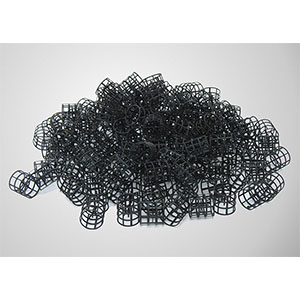
Plastic Hiflow Ring (Plastic Ring)
Splash filler is designed in cylindrical shape and made of polypropylene. It is the simplest and most common type of filling material. As water flows downward onto the fill, it forms droplets that disperse into the air. Thus, it increases the surface area of water exposed to air. Then hot water slowly flows over the filling. It creates a turbulent flow that maximizes heat transfer.
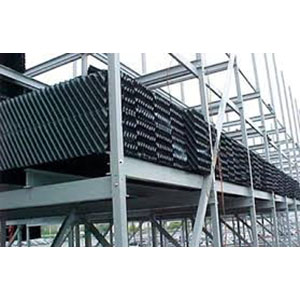
Film filling (PVC Honeycomb Filling)
The film filling is designed in a honeycomb shape. It consists of a series of thin PVC, corrugated sheets. Water flows over the sheets, thus maximizing the surface area of the water exposed to air. Moreover, it forms a thin film that allows efficient heat transfer. This design provides a large surface area for heat transfer. Additionally, it minimizes pressure drop and resistance to air flow.
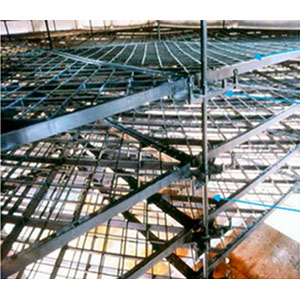
Splash Fill:
Splash fill has a firm, grid-like texture. Made of PP material. The water flows downward and is sprayed onto the fill material. As the filler wets its surface, it continuously breaks down into smaller droplets. Thus, it is divided into minimum droplets, ensuring contact with air and increasing cooling performance.
The choice of fill material depends on several factors, such as the design, size and intended use of the cooling tower. Factors such as water quality, temperature and flow rate also affect the choice of fill material. As a result, it is important to choose the appropriate fill material for your cooling tower to ensure efficient heat transfer and smooth operation.
Water Cooling Tower Fill Usage Areas
Water cooling tower fillers are used in cooling towers to increase the surface area of the water in contact with the air. Therefore, the cooling process is accelerated. Infills are made of a lightweight and durable material such as PVC or polypropylene. It is designed to create a large surface area for water to flow through.
The main areas of use of water cooling tower fillers are
Cooling Towers:
Water cooling tower fillings are used in cooling towers to increase the surface area where water is in contact with air and thus to perform the cooling process.
HVAC Systems:
Water cooling tower fillers are also used in HVAC (heating, ventilation and air conditioning) systems to cool the air circulating within the building.
Power Plants:
Power plants use water cooling tower fills to cool the water they use.
Chemical Facilities:
Chemical plants use water cooling tower fills to cool the chemicals used in their processes.
Oil Refineries:
Oil refineries use water cooling tower fills to cool the oil used in their processes.
Steel Mills:
Steel mills use water cooling tower fills to cool water used in production processes.
Generally, water cooling tower fill is used in any industry that requires the cooling of water or other liquids. It is an important component in maintaining efficient and effective cooling systems.
